
Introduction: Why VRIO Framework is Critical to Every Business.
What is unique about your business? What is more important is what makes customers come back to you rather than them?. And it is here that the VRIO Framework is your secret weapon.
The VRIO Framework is a strategic analysis tool developed by Jay Barney during the 1990s and assists organizations to consider their internal resources and capabilities. As a result, companies are able to determine the value of assets that actually give them a competitive advantage in the current saturated market.
We will discuss the functioning of the VRIO Framework, why it is important to your business strategy and how you can use it to develop a stronger market presence. What is more, we will discuss practical situations and practical measures to apply this effective analytical method.
An Introduction to the VRIO Framework: How to deconstruct the Acronym.
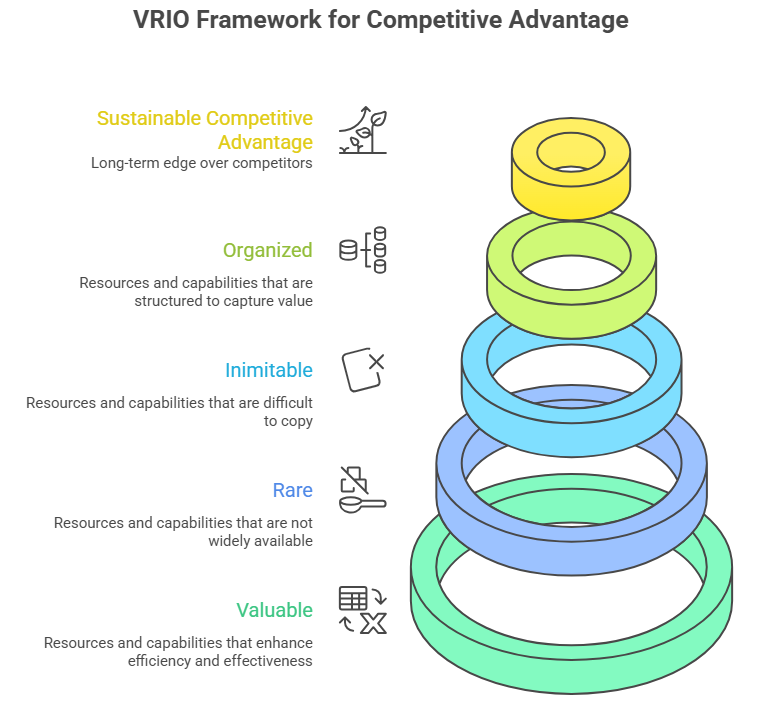
VRIO Framework is an abbreviation of four key questions every business should answer regarding its resources:
Value: Does It Create Worth?
The first question is regarding whether a resource or capability can allow your company to take advantage of opportunities or mitigate the threats. Also, it identifies whether this asset can assist in enhancing efficiency or effectiveness.
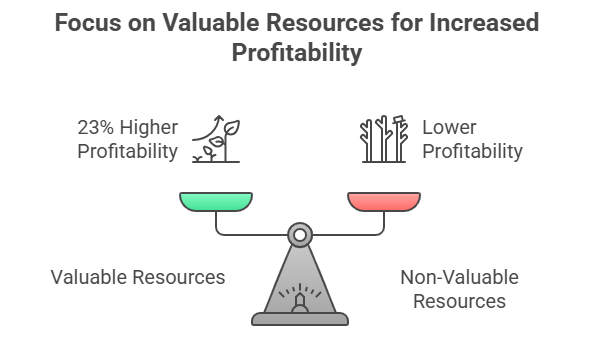
Research by the Harvard Business Review reveals that firms that prioritize on valuable resources are far more profitable (by 23 percent) than their counterparts who do not. Thus, it becomes crucial to find resources that value-create.
To use the example of Amazon, the complex logistics system provides huge value to the company, allowing it to deliver faster. This has seen customers have access to same day or next day shipping.
Rarity: Is It Uncommon?
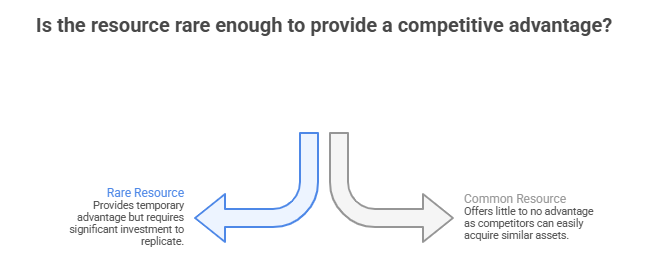
Then, you should analyze scarcity. Is your resource very abundant or are there only a few competitors with it?
Temporary competitive advantage is offered by rare resources. Nevertheless, when the rivals can obtain similar assets easily, the benefit fades away rather fast.
Take into account Apple brand recognition and integration into the ecosystem. These factors are seldom common since they took a long period to create and need a huge capital outlay to duplicate.
Imitability: Do Rivals Replicate it?
The third pillar looks at the ease with which the competitors may replicate or replace your resource. When they are hard to copy, the resources would be more valuable.
The McKinsey research claims that a company that possesses hard-to-imitate capabilities will have better competitive advantage 3.5 times longer than the one that possesses easily replicable resources.
There are a number of reasons why resources are inimitable:
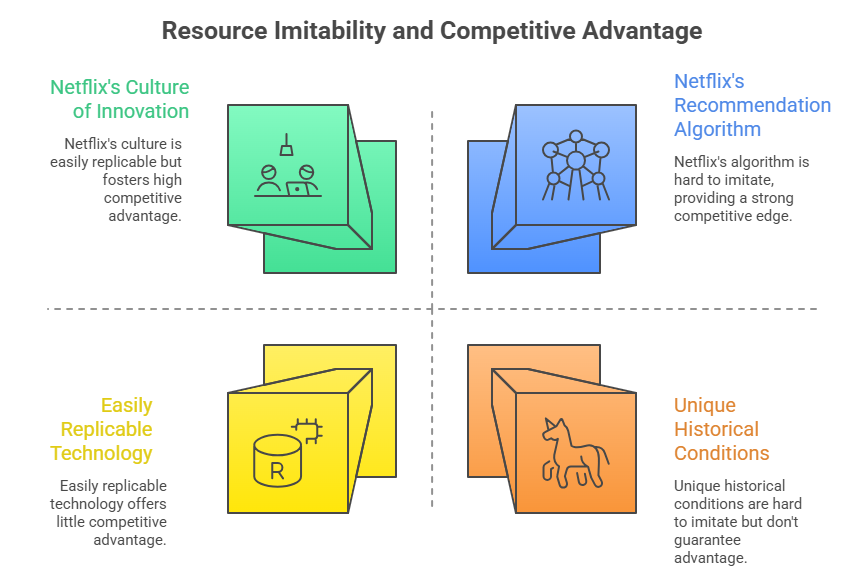
Historical conditions: Exceptional conditions in the process of resource development.
Causal ambiguity: Process of not comprehending what causes the resource to be valuable.
Social complexity: Resources within an organizational culture or relations.
As an example, the recommendation algorithm of Netflix has developed years of data gathering and polishing. Additionally, the culture of innovation that the company has is extremely hard to emulate.
Organization:
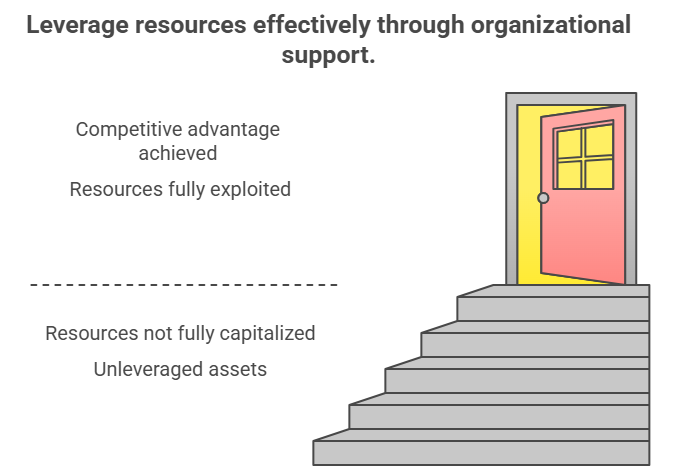
Lastly, even precious, unique, and unimitable resources require an appropriate organization support. The companies lose the ability to maximize their assets without proper structures, processes and systems.
This incorporates possession of the appropriate management systems, organization structure, and compensation policy to take advantage of resources.
The Four VRIO Analysis Results.
By passing resources through the VRIO Framework, there are four unique competitive positions that occur:
Competitive Disadvantage
The inability of a resource to pass the value test provides a competitive disadvantage. These resources consume finances as well as energy and do not add to your market position.
Therefore, companies ought to either convert these resources or do away with them.
Competitive Parity
Valuable resources that are not rare bring about competitive parity. As much as you need to survive, they do not make you stand out among others.
As an example, fundamental customer service functions are useful and required. Nonetheless this brings about parity and not a competitive edge, given that most companies provide the same level of services.
Short-term Competitive Advantage.
The resources, which pass the value and rarity tests but fail the imitability test, give temporary competitive advantage.
The first mover advantages usually come under this category. Firstly, there are advantages of being first. However, competitors end up getting into the market with other similar items.
Deeply rooted Competitive Advantage.
The holy grail is realized when resources are valuable, rare, hard to replicate and appropriately structured. This generates long term competitive advantage.
According to research by Bain and Company, firms that have sustained competitive advantages realize 50-percent more on the returns of shareholders in ten years.
VRIO Framework: Application in a Step-by-Step Guide.
Step 1: Identify Your Resources and Capabilities.
First, develop a detailed inventory. Include:
Physical resources: Technology, financial assets, physical resources.
Intangible assets: Brand recognition, intellectual property, organizational culture.
Capabilities: Resources that are combined into skills, processes, and routines.
Step 2: Evaluate Each Resource Against VRIO Criteria
Create a simple table for assessment:
| Resource | Valuable? | Rare? | Costly to Imitate? | Organized? | Competitive Implication |
| Brand | Yes | Yes | Yes | Yes | Sustained Advantage |
| Technology | Yes | No | No | Yes | Competitive Parity |
Step 3: Strategic Priority Identification.
Investment emphasis should be put on resources that can generate sustained or short-term competitive advantage. In the meantime, make sure that parity resources comply with industry standards and not over-invest.
Step 4: Protection Strategy Development.
On the valuable resources, employ measures to sustain or increase the effect of competitive impact. This might include:
- Enhancing organizational frameworks.
- Constructing an obstacle to imitation.
- Innovation and continuous improvement.
Examples of VRIO Frameworks.
Southwest Airlines
The system of point-to-point routes and the organizational culture of Southwest have all four VRIO tests. The culture that has been developed over decades is worth preserving, it is unique, and it is almost impossible to copy. Moreover, they make the most use of this advantage in their organizational structure.
Coca-Cola
Sustained competitive advantages are in the form of the secret formula and recognition of the brand internationally. The formula cannot be copied, but the brand value is based on the marketing investments and emotional attachment to the consumers through more than a hundred years of marketing research.
The sustained advantage of Google is created by its search algorithm and the large scale amassing of data. The algorithm as such is precious and uncommon. In addition to it, the imitation is very expensive due to the huge amount of data needed to train it.
Mistakes in application of the VRIO Framework.
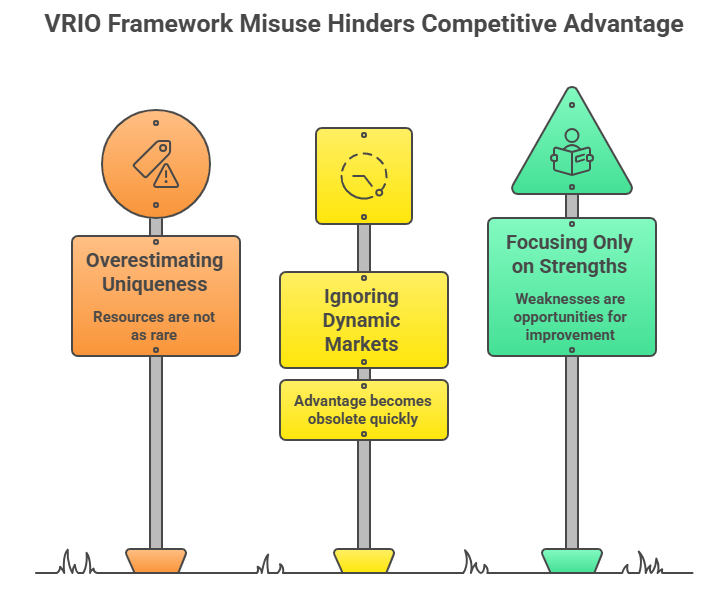
Overestimating Uniqueness
Most businesses tend to think that their resources are more rare than they seem to be. Thus, it is advisable to carry out an external market research that is honest and only then to state that something is rare.
Ignoring Dynamic Markets
Markets evolve constantly. A resource that is offering long run benefit now may be outdated tomorrow. In turn, it is essential to conduct regular reassessment.
Focusing Only on Strengths
There are also weaknesses in the VRIO Framework. Resources that do not pass the VRIO test are not to be overlooked, as they are the source of improvement.
Combining VRIO with the Other Strategic Tools.
The VRIO Framework has a great performance with other analytical tools:
- SWOT Analysis: Break down further in strengths and weaknesses using VRIO.
- Porters Five Forces: Learn how your resources contribute to competition.
- Value Chain Analysis: Determine the place of most valuable resources.
Conclusion: Constructing Your Competitive Fortress.
Using the VRIO Framework, you have a method of figuring out exactly what makes your business special. It is possible to figure out what assets should be invested in and defended by analyzing resources in terms of value, rarity, imitability, and organization.
It is worth remembering that sustainable competitive advantage does not occur as an accident. VRIO framework needs strategic planning, constant evaluation, and alignment of organization.
Which resources in your organization do not fail the VRIO test? Write your ideas in the comments section below and find more of our strategic planning tools to revolutionize the way you analyze business.