
Introduction: Why PESTEL Analysis is Necessary to Every Business.
Ever wondered why some businesses perform well and others fail even in the same business domain? This is normally determined by their knowledge of the outside world. In addition, the companies that thrive do not just respond to the changes, they are ahead of them. In this point that PESTEL analysis will be your strategic edge.
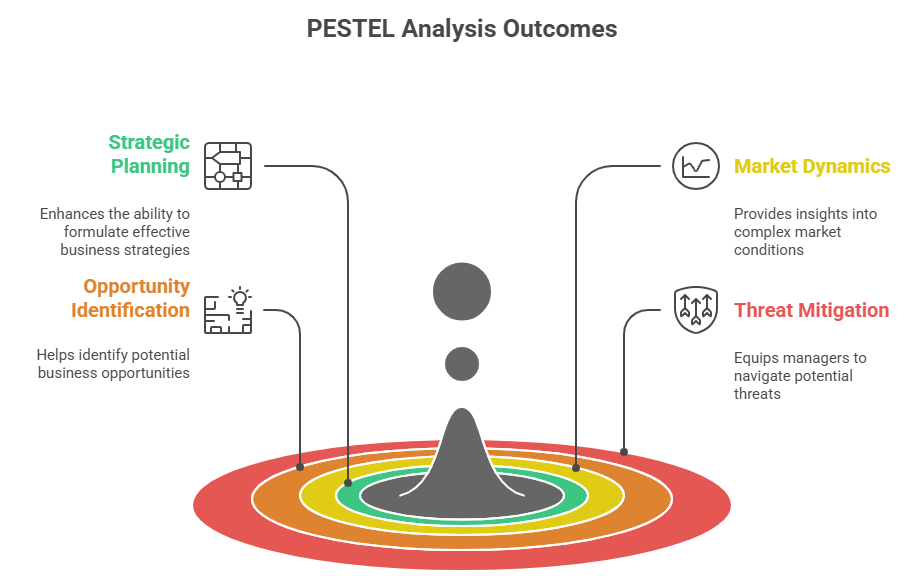
A PESTEL analysis is an effective tool to enable companies to study six of the essential external variables, including Political, Economic, Social, Technological, Environmental and Legal. Moreover, this analytical tool helps the organizations to create opportunities, reduce risks and make sound strategic decisions. As a result, PESTEL-based companies are more likely to overcome the complexities of the market and outcompete the rest.
This is an all-inclusive guide that includes how to perform a good PESTEL analysis, the description of each element and what are effective applications that can make a real business outcome. As such, regardless of your status as a startup founder, marketing expert, or business strategist, this resource will help change the way you think about strategic planning.
What is PESTEL Analysis?
PESTEL analysis is a strategic management tool that is applied to determine and analyze macro-environmental factors that influence an organization. Also, this framework does not confine itself to internal workings but takes the external influence that forms business environments.
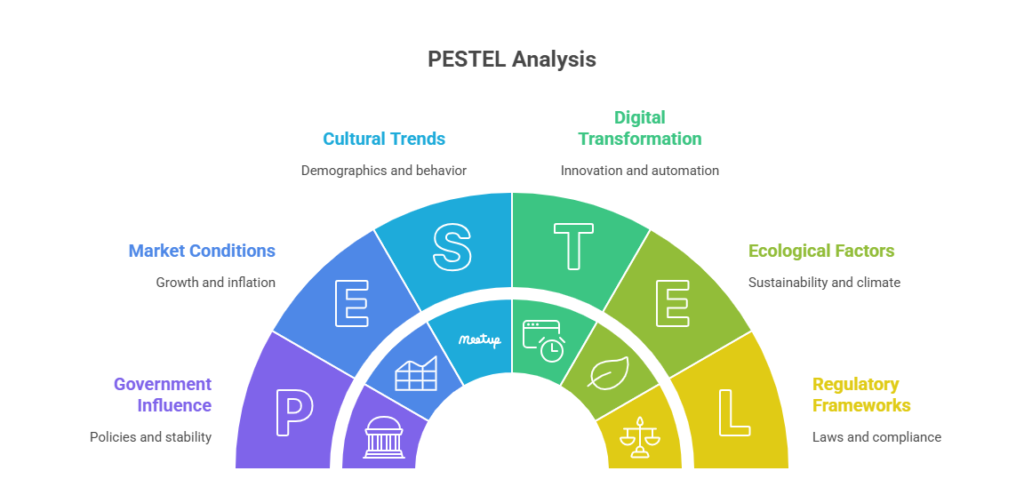
The 6 components are collaborative to give you a 360-degree picture of your business world:
- Political: Political stability, government policies and regulations.
- Economic: This is the economic growth, inflation rates and market conditions.
- Social: Consumer behavior, demographics and cultural trends.
- Technological: Digital transformation, automation and innovation.
- Environmental: Climate change, sustainability and ecology.
- Legal: Legal regulations, compliance, and regulations.
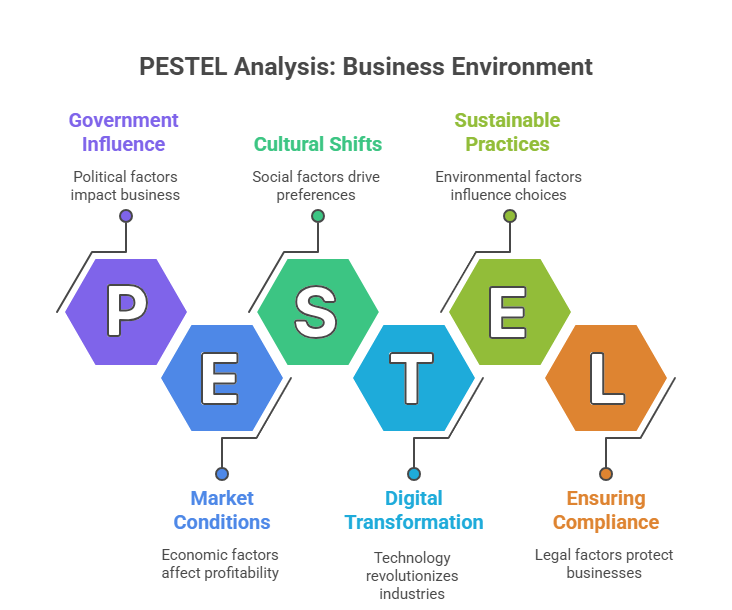
Notably, PESTEL analysis assists companies to know the prevailing circumstances, as well as the new trends, which may influence the performance in the near future.
The six PESTEL Components.
Political Factors: Political Government Influence.
The nature of political influence and access to the market in the business is an important determinant. They are stability of the government, taxation, trade policies, and political ideology. An example is the effect of alteration in trade agreements that may open new markets or place obstacles overnight.
Key considerations:
- Tax policies and incentives
- Trade barriers and customs.
- Political stability and rule.
- Relative priorities in government expenditure.
- Labor and employment laws
Companies needs to pay close attention to the political progress. As an illustration, Brexit had a severe impact on the businesses that operates between the UK and EU, meaning that such firms had to make strategic changes as soon as possible.
Economic Factors: Managing the Market Environment.
Purchasing power, market demand and profitability of the business are all controlled by economic factors. Consequently, a knowledge of the economic indicators can be used to forecast consumer behavior and market trends.
Crucial economic factors are:
- Economic cycles and growth rates of GDP.
- Inflation and interest rates.
- Currency stability and exchange rates.
- Unemployment levels
- Indices of consumer confidence.
The International Monetary Fund found that 78% of business strategic decisions are directly affected by the global economic conditions. Regular economic surveillance is, therefore, not a choice, but a must.
Social Factors: The Reading Cultural Shifts.
Social factors are those which capture the population traits, changes in lifestyle and cultural orientations. Furthermore, these are determining consumer preferences and brand loyalty more and more.
Significant social factors:
- Demographic characteristics (age, gender, ethnicity)
- Literacy and education levels.
- Trends in health consciousness and wellness.
- Expectations of work-life balance.
- Cultural values and beliefs
As an example, the increasing demand of sustainable products can be thought of as a response to altered social values. Therefore, environmental awareness has become a core business concept of such brands as Patagonia, which proves how social aspects can develop competitive advantages.
Technological Factors: Adopting Digital Transformation.
Industries are technologically transformed at unheard-of speeds. Also, the technological advancement brings opportunities as well as threats that need to be watched all the time.
Trends to be monitored in technology:
- Machine learning and artificial intelligence.
- Data analytics and cloud computing.
- Automation and robotics
- Cybersecurity challenges and solutions.
- Connection and technology Mobile.
According to Gartner research, 87 percent of top-level business leaders place a priority on digitalization. As such, companies need to keep on evaluating the impacts of the emergent technologies on their operations and competitive positioning.
Environmental Factors: Construction of Sustainable Practices.
Environmental concerns have become compulsory and not optional. In addition, issues of climate change and sustainability are currently affecting the behavior of consumers, investors as well as the regulatory mandates.
Key environmental aspects:
- Carbon footprints and climate change.
- Renewable energy adoption
- Recycling and waste management.
- Availability of natural resources.
- Environmental codes and norms.
It is worth noting that a good environmental practice tends to increase the brand reputation and customer loyalty of the company. Therefore, environmental factors pose a threat and also opportunity.
Factors of Law: Enforcement of Compliance.
The legal factors include laws and regulations of the business operation. Also, law adherence saves companies the high expenses associated with fines and a bad reputation.
Critical legal imperatives:
- Consumer protection laws
- Laws on data privacy (GDPR, CCPA)
- Employment and labor laws
- Health and safety standards
- Intellectual property rights.
The adoption of more stringent data protection laws in recent years illustrates the impact that changes in the law have on business, where businesses must transform rapidly to avoid immediate severe impact.
What is the PESTEL Analysis and How to do it.
Step 1: Define Your Objectives
One, what you want to accomplish is obvious. Is it a new market, a product or an evaluation of the competitive threats? Your goals, therefore, are what you focus on as things to investigate further.
Step 2: Gather Relevant Data
Thereafter, gather data that is of authority such as government publications, industry magazines, market research as well as news media. Moreover, a combination of both quantitative and qualitative data give in depth insights.
Step 3: Analyze Each Factor
Then, analyze each component of PESTEL in a systematic manner. Determine trends, evaluate the possible influence of the trends, and ascertain the probability of occurrence. Also, think of the way factors are interacting and affecting one another.
Step 4: Prioritize Important Findings.
Then rank according to their possible value and urgency. Not all factors have equal priorities thus prioritize on those that matter the most.
Step 5: prepare Strategy Responses.
Lastly, develop operational plans about opportunities and threats that have been identified. In addition, develop monitoring mechanisms to trace the changes over time.
Real-World PESTEL Analysis Case Study.
Retail Industry
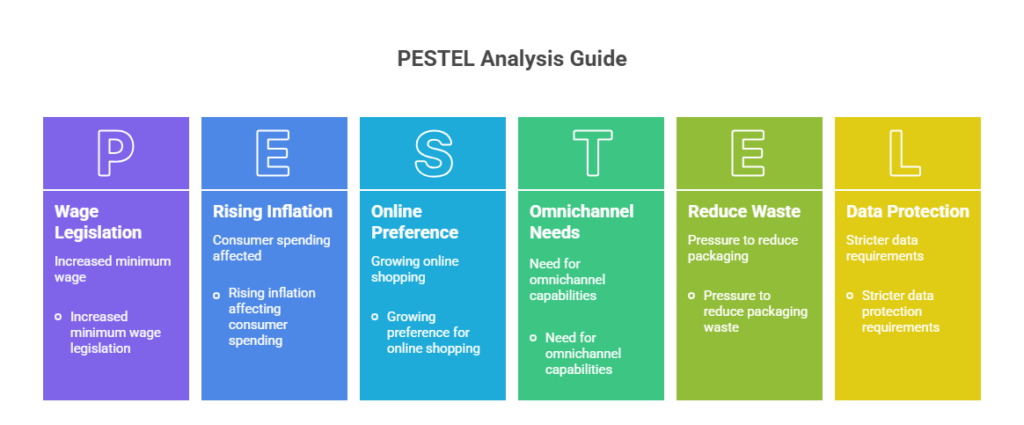
A retail business that has undertaken PESTEL could have found that:
Political: Minimum wage legislation.
Economic: Increasing inflation of consumer expenditure.
Social: Increasing popularity of Internet purchases.
Technological: Requirement of omnichannel.
Environmental: Driving force towards less packaging waste.
Legal: Tougher data protection specifications.
Thus, decisions concerning the location of stores, online investments, and sustainability measures are informed by this analysis.
Advantages of Consistent PESTEL Analysis.
Organizations that conduct routine PESTEL analysis have several benefits:
Risk Management: Preempting Crises by threats.
Strategic opportunity Recognition: Early identification of developing trends.
Informed Decision-Making: Foundation strategies on full information.
Competitive Advantage: Be ahead of the market changes.
Optimization of Resources: Investment.
Besides, research indicates that firms that undertake environmental scanning are 15 20 percent more profitable than their rivals.
PESTEL Analysis errors to be avoided.
Even the seasoned strategists commit mistakes. Be on the lookout of these traps, therefore:
Analysis paralysis: Gathering too much data but failing to act on it.
Obsolete information: Making use of obsolete information in dynamic environments.
Narrow research: No consideration of interdependencies between factors.
Exercise one-time: PESTEL as an event and not a process.
Absence of objectivity: Allowing biases to affect interpretation.
This means that you should be disciplined, keep on updating and keep different views of your analysis.
PESTEL vs. SWOT: difference of the two.
As much as both are strategic tools, they are used in different purposes. PESTEL analysis looks at the external factors that are in the macro-environment and SWOT analysis looks at internal strengths and weaknesses as well as external opportunities and threats.
| Feature | PESTEL Analysis | SWOT Analysis |
| Focus | External macro-environment | Internal + External factors |
| Scope | Broad industry/market level | Organization-specific |
| Timeframe | Long-term trends | Current state assessment |
| Best Used For | Strategic planning, market entry | Competitive positioning |
Thus, smart companies combine the two instruments in strategic planning to the full extent.
Overall: PESTEL Analysis: Now or Never.
PESTEL analysis is not a new business buzzword, but it is a viable framework that has changed the way organizations perceive and react to the surrounding. Moreover, in the fast-paced business environment of the world today, external awareness is what keeps a successful company afloat and companies that are not doing well.
Analyzing Political, Economic, Social, Technological, Environmental, and Legal factors in an organized way, you will know opportunities and threats influencing your business. In addition, PESTEL analysis facilitates the proactive approach to strategy formulation as opposed to the reactive approach to crisis management.
It is important to remember that the point is not the perfection but the regular enhancement of the environmental scanning and strategic thinking. Hence, begin with little, improve your procedure, and integrate PESTEL analysis into your daily strategic planning cycle.
Prepared to build up your strategic planning? Discuss your experiences of PESTEL analysis below, or apply to the other related materials on strategic management systems. We also have a newsletter you can subscribe to in order to receive weekly business strategy and competitive intelligence.