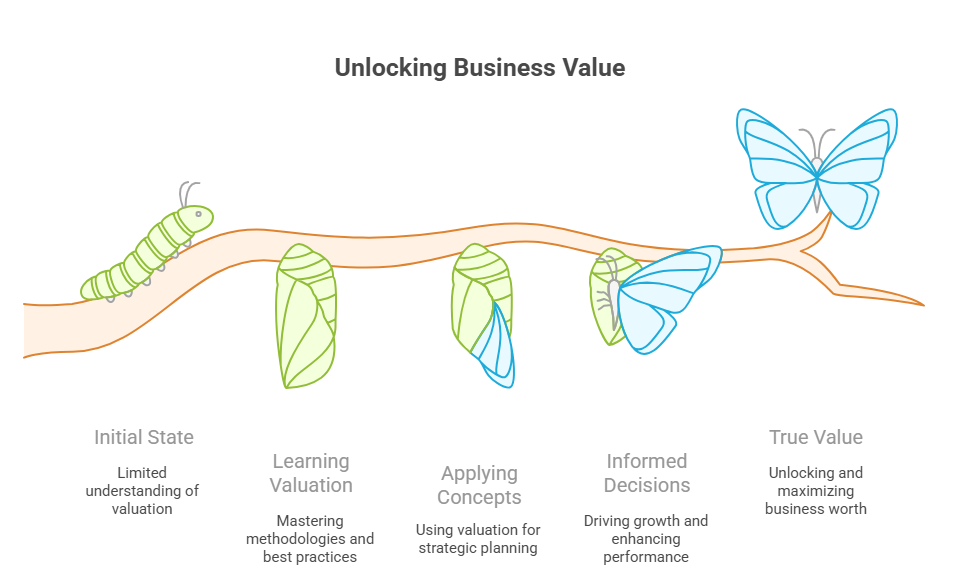

Introduction: Why It is important to Understand Business Value.
Imagine the following scenario. One of two companies operating in the same industry. Having the same revenues, however, one company is worth three times more than the other. How is this possible? The solution is given from the knowledge of corporate valuation. It is a art and science of knowing what a business is actually worth.
In the modern data driven business environment, it is not only the Wall Street analysts or investment bankers whose business should know how to properly evaluate the value of a business. As an entrepreneur strategizing on how to leave the business, as an investor seeking opportunities, or business leader making strategies, knowledge in corporate valuation would prove critical in success.
This all-inclusive guide will take you through all that you should know in regards to business value and corporate valuation. This article will discuss valuation techniques. Some of the things that increase or decrease value. Also pitfalls need to be aware of and things can do right now to increase the value of a company. At the conclusion, you will be in a good position to make sound decisions on business value in any setting.
What Is Corporate Valuation? Knowledge of the Fundamentals.
Corporate valuation involves coming up with the economic value of a business or a company. Imagine placing a price tag on a whole organization. All its assets, future earnings capacity. This will position in the market and its future prospects all in a single figure.
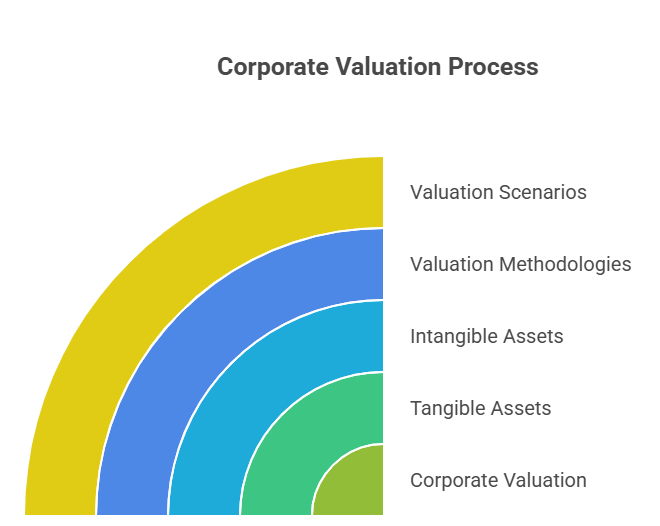
Business value is not only what can be found on a balance sheet. It includes physical resources, such as real estate and equipment. Also the intangible aspects as well, such as brand reputation, customer relationships, intellectual property and the growth potential. All these are evaluated and measured using different valuation techniques.
Corporate valuation is spread in number of areas. Firms are valued in mergers and acquisitions, initial public offering, fundraising, estate planning, divorce proceedings and strategic planning projects. A different approach might be needed in every case, nevertheless, the main principles are the same.
The importance of Business Value Assessment.
Knowledge of the business value plays a number of vital roles in the business world. Valuation helps buyers and investors to set fair prices on buying and anticipated returns. To sellers, it sets a level of negotiation and assists in making claims. This includes facts to support the request of price.
Besides, periodic valuation processes assist business owners in monitoring their progress in meeting financial targets. Tracking the effect of strategic choices on company value over a period of time helps many ways. As an example leaders to course-correct and maximize their efforts towards creating sustainable business value.
Important Techniques in Valuing a Company.
There are number of different methods of estimating the business value. These approaches have their different pros and cons. Those are based on the nature of the company and the use of the associated valuation. Let us find out the most popular techniques.
Income-based methods of valuation.
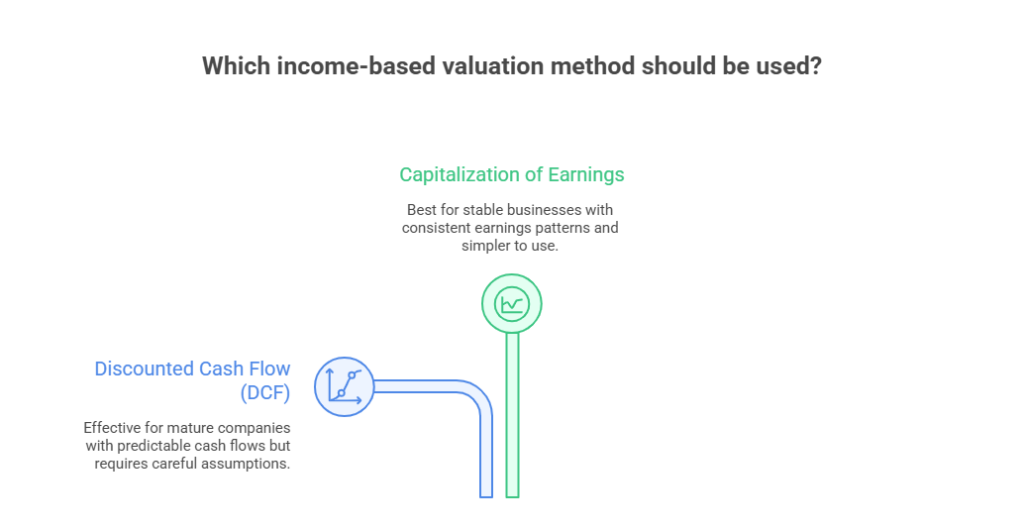
Methods based on income generation considerations on future cash flows of a company. Among these methods, the Discounted Cash Flow (DCF) analysis holds the golden rule. The techniques uses discounted future cash flows to derive current value. This is done by discounting the future cash flow with a reasonable discounting rate.
DCF is especially suitable when the cash flows of a company are predictable, and the company is mature. Further, it must make assumptions on growth rates, profit margins and risk factors carefully. The DCF model according to the Harvard Business School provides the estimated intrinsic value of a company. This is done by assessing the forecasted cash flows in order to make more informed decisions on making investments. Even minor adjustments of these assumptions may have significant effects. This will effects on the ultimate valuation. Also this is why sensitivity analysis is commonly carried out as part of doing the DCF.
The other method of income-based approach is the Capitalization of Earnings method. This less complex method simply gives the expected annual earnings of a company. This is done by divided by a capitalization rate to come up with value. It is most effective in the case of stable companies having regular incomes.
Market-Based Value Techniques.
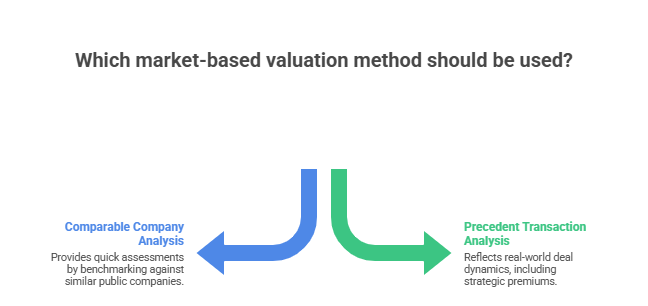
The business value is calculated through market available methods that compare the target company to other related businesses sold recently or ones that are publicly traded. The Comparable Company Analysis evaluates valuation multiples of similar companies, e.g. Price-to-Earnings (P/E) ratios or Enterprise Value-to-EBITDA multiples.
This is then multiplied with the financial metrics of the target company to approximate the value of the target company. As an example, when software industry similar companies with an average price-to-EBITDA ratio of 8x, a software company with a 5M EBITDA could be worth approximately 40M. Corporate Finance Institute says that this relative valuation technique offers rapid valuations by comparing to other comparable companies that are publicly traded.
The Precedent Transaction Analysis examines the prices of acquisitions made of other related companies in recent transactions. This technique can produce more valuations than the comparable in the public market since premiums in the acquisition are usually paid to have the control of the business. Research within the industry reveals that precedent transactions depict actual deal dynamics in the real-world scenario such as strategic premium and the prevailing market environment.
The Techniques of Asset Based Valuation.
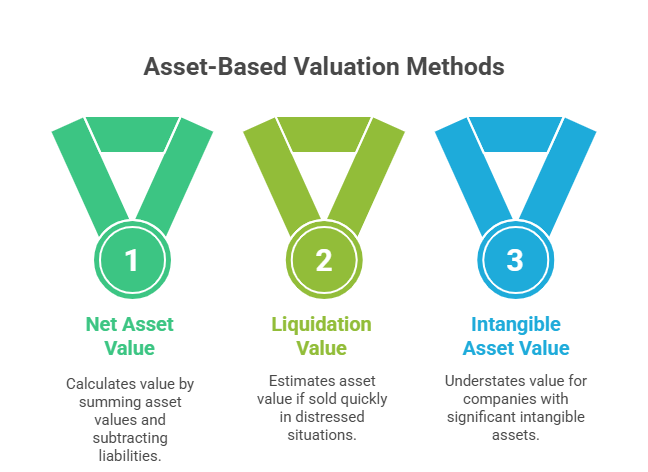
Asset-based approaches determine the value of the business by adding the fair market value of the assets and deducting liabilities of a business. The Net Asset Value method is simple and tends to understate the value of those companies, the value of which is based largely on intellectual property, brand equity or other intangibles.
The Liquidation Value technique is used to estimate the value of assets that would be obtained upon a sale in haste usually in the distressed circumstances. This method yields the least valuation and is most applicable when dealing with a business that is on the verge of bankruptcy or closure.
Critical Factors That are Driving Business Value.
The knowledge of what drives corporate valuation is essential in enabling the business owners to make strategic decisions that increase the value of their company. There are a number of major considerations that always influence the valuation of businesses, as discussed by the business valuation experts.
Financial Performance and Profiling.
Business value is based on strong and sustained financial performance. The growth in revenue evidences demand and scalability of a market and good profit margins are a sign of efficient operations and price power. Based on recent industry statistics, small businesses having a yearly income ranging between 1-2.5 million are worth an average of 3.3 times profits. Those companies whose profitability trends are on the way to improvement are usually highly valued.
The cash flow generation is of special importance as it is the real money which can be reinvested or used to pay debts or even distributed to owners. Companies that efficiently turn their profits to cash are highly regarded compared to those with inefficiency in the management of working capital.
Market Position and Competitive Advantages.
The valuation highly depends on the position of a company in its industry. Strong brand recognition, customer loyalty and sustainable competitive advantages warrant premium valuations to market leaders. Such moats save companies competition and contribute to profitability in the long term.
It also involves diversification. Companies that are over-reliant on a customer, supplier or product are more risky and lower-valued. On the other hand, companies that have diversified income and various avenues of development are considered to be more precious and robust.
Expansion Potential and Scalability.
The outlook of the future growth has a strong impact on corporate valuation particularly with younger companies. Companies that are in the growing markets with evident prospects of how to grow their operations attract better multiples, as compared to companies that are in the same business but are mature or experiencing a downturn. A 2024 market analysis indicates that the growth potential has become a very important consideration in a bid to cope with the ever-evolving economic times.
Scalability: the quality of being able to increase revenue without corresponding increases in expenditure is an extremely prized quality. Premium valuations are also common in technology companies since their business models enable them to be scaled fast with little marginal costs per customer.
Management Quality and Organizational Structure.
Valuation is sensitive to the strength of the management team of a firm. Seasoned leaders who have a good track record give an assurance of a business to implement the strategies and overcome obstacles. On the other hand, over reliance on one important individual by the company can lead to a discounting of the company because of key person risk.
Having well-documented systems, processes and procedures that enable the business to operate effectively without having to involve their owners every now and then adds value. Such transferability is essential since consumers would like to know that the good is going to stay as a viable company in spite of the shift in ownership.
Risk Factors and Industry Dynamics.
All businesses are subject to valuation risks. There are regulatory risks, technological disturbances, economic cycles and competitive pressures among others. Lower multiples are normally awarded to companies in the highly regulated industries or those that are highly disrupted.
Valuations are also determined by industry dynamics such as industry growth rates, industry fragmentation and industry barriers to entry. The recent trends on valuation indicate that median EBITDA multiple rose to 7.5x in middle-market transactions in 2024, with multiples differing across industries. Companies in sectors with a high entry barrier and low competition usually sell at high prices as they are not in competition and their markets are secure.
Increasing the Business Value of your Company.
In case of business owners who concentrate on value creation, a number of strategic projects may greatly improve corporate valuation, in the long run.
Enhance Financial Management.
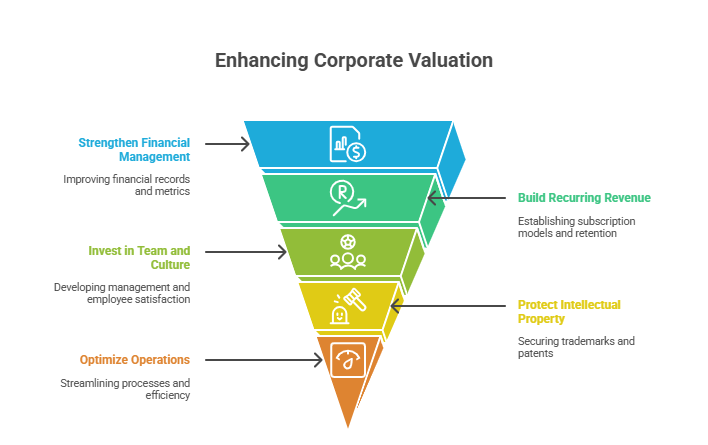
Financial records are clean and accurate and cannot be compromised. Install effective accounting systems, keep a good paper trail and think of having annual financial audits by reputable companies. These practices create credibility and less buyer uncertainty in the due diligence.
Pay attention to the enhancement of such key metrics that buyers examine. Enhancing EBITDA margins, decreasing acquisition costs to customers, and enhancing cash conversion cycles are all methods of directly increasing business value. Establish attainable goals and update on progress after every quarter to stay on track.
Establish Repetitive Revenue Sources.
Long term contracts and subscription models give the predictability that buyers see as very important. Business value experts claim that companies that have 70 percent and above recurring revenues can be valued 30-50 percent higher than transaction-based competitors. Where feasible, shift to recurring revenue models in your business model.
Retention of customers is also significant. The, high customer lifetime value, and low churn rates imply the product-market fit and sustainable competitive advantages. Adopt customer success programs to achieve the highest retention rate and also show the stickiness of your revenue.
Make an Investment in Hunan Resource and Culture.
Create an effective second level of management who is capable of running the business on its own. Record all the major processes and introduce staff to them. This de-risking elevates the business to be more appealing and valuable to the potential buyers.
The Company fosters a good organization culture that encourages the recruitment and retention of the best talent. Employee satisfaction is high and is associated with improved customer experiences, innovation, and efficiency of operations- all of these add to business value.
Secure Intellectual Property.
Protect your intellectual property by registering trademarks, patents and copyrights. Such legal shields provide competitive advantages and are expressed as physical assets that boost corporate value. Proprietary processes and trade secrets even though your IP is not patentable.
Maximize Efficiency of Operations.
Automate processes to enhance profitability and growth. Automation of repetitive functions, removal of redundancies and investment in technology that leads to increased productivity. Operational efficiency shows management competence, and increases the bottom line at the same time.
Compare your performance to the industry standards. Determine the points in which you are performing below average and institute improvement efforts. The capability to show industry leading metrics in the important areas warrants the premium valuations.
Common Corporate Valuation Pitfalls.
Even business owners who have been doing business for a long time commit errors in valuing the business. This is because knowing the pitfalls in valuation can guide you towards making such decisions.
Excessive Dependence on one Valuation Method.
There is no single approach that can give a complete picture of business value. Smart valuators apply various methods and triangulate to a good degree. Using either of these approaches solely, be it DCF, market multiples or asset-based approaches, would produce a very skewed result.
Disregarding Industry-Specific Factors.
Valuation depends on the specific aspects of different industries. There is different valuation of software firms as opposed to manufacturing firms, which are not the same as retailing. Accurate corporate valuation should be taken into account in terms of industry-specific multiples, growth expectations, and risk factors.
Making Implausible Projections.
Positive financial forecasts that are overly optimistic lack credibility and they will not stand the test of time. Make base estimates based on past performance, plausible assumptions in the market, and pessimistic estimates. It is preferable to promise little and deliver a lot than the other.
Failure to Adjust to One-Time Events.
Valuation metrics should be normalized on extraordinary income or expenses that will never recur again. The inability to adapt one-time gains, losses, and owner-specific costs makes the actual earning power of the business inaccurate and results in unrealistic valuations.
Underestimation of the Significance of Due Diligence.
Due diligence will mean that buyers will anxiously research every corner of your business. Issues that are found in the process tend to result in lowered valuations or cancelation of deals. Do your own internal due diligence preemptively to determine and mitigate problems before they bring a deal to its knees.
The contribution of the Professional Valuators in assessment of business value.
Although the entrepreneurs themselves can acquire insights into valuation principles, the complicated cases may require expert help. The certified business valuators introduce professionalism, objectivity, and trustworthiness to the process.
Licensed appraisers are members of such organizations as the American Society of Appraisers or the National Association of Certified Valuators and Analysts. These qualifications involve a lot of training, examinations and continued learning in the valuation methodologies and standards.
In what situations is professional help the most useful? Professional valuations are useful to major transactions such as sales, mergers or acquisitions and meet the needs of buyers and aid negotiations. Law pertaining to divorce, estate planning and shareholder disputes normally warrant formal appraisals by accredited professionals.
Periodic professional valuations remain important in business even in the absence of any immediate transaction plans since they allow the owners to gauge the progress and make sound strategic decisions. Most entrepreneurs who succeed with their businesses have their businesses valued after every 2-3 years so as to compare the performance with the benchmark and value drivers to highlight.
Valuation Multiples: Making Sense of the Numbers.
Corporate pricing frequently encompasses multiplying the measures of financial performance. The knowledge of what these multiples are and their application is a key to gain a better idea of the valuation process.
Most common valuation multiples explained.
One of the most commonly used multiples is the Enterprise Value-to-EBITDA (EV/EBITDA), as it controls capital structure and no operating expense factors. As per valuation study, technology firms may be valued at 10-20x EBITDA and conventional retailing companies may only be valued at 4-6x EBITDA. These multiples represent industry risk profiles and growth prospects.
Price to earnings (P/E) ratios are the ratios of price to earnings per share of the stock of a company in the stock market. Other similar concepts are occasionally applied in the setting of the private company value, but with some adjustments to account for the distinctions between the public and the private markets. The increased P/E ratios imply the increased growth expectations.
Early-stage companies or industries with a wide range of profitability will often use revenue multiples. SaaS companies with high growth rates may be valued at 5-15x annual recurrent revenue, based on the growth rates, retention and market conditions.
What Multiple Ranges are influenced by.
There are various issues which dictate the position of a given company in the various ranges of the industry. A high rate of growth should attract higher multiples because so should higher profit margins and higher customer retention ratios. Multiples of larger companies are usually higher in comparison to smaller companies because of reduced perceived risk.
Multiples are also influenced by the market conditions. In the period of the economic expansions and bull markets, the multiples are usually stretched because optimism is high. Recessions and bear markets, on the other hand, squeeze multiples when risk aversion is increased. The 2024 industry analysis shows that the economic trends have a direct impact on business valuations in the form of alterations in the interest rates, inflation, and confidence in the market in general.
Conclusion: Action to be Taken in order to develop and learn Business Value.
Knowing corporate value will enable you to make wiser business decisions, be it in the construction of a business, making an investment, or exiting a business in the future. Business value is not an amount but a collective outcome of millions of strategic decisions, refinements in the way the business is run, and how the business has been positioned in the market.
The most important lesson is that business value is created deliberately and gradually with the help of the special attention to all those drivers that have the most significant impact: good financial results, competitive advantages, scalability, good teams, and intelligent risk management. With continuous improvements in these areas, you can build your company value to a considerable extent.
Begin with benchmarking your status quo. You can learn how your business would be valued today by applying methods that are discussed in this guide. Determine the differences between where you are and where you want to be and develop a systematized plan of action to bridge the difference.
It is important to remember that corporate valuation is a science although it is an art. Methodologies offer guidelines and system, but judgment, experience and industry knowledge are fundamental towards valuing fair value. Do not be afraid of seeking the services of professional advisors when the stakes are high.
What are you going to do today to increase the value of your business? It may be for a sale you are about to make within next few years or long-term equity building, the principles discussed here are a guide to success. You can share your ideas and experiences in the comments below and use our related materials on financial planning and business strategy to keep studying.